
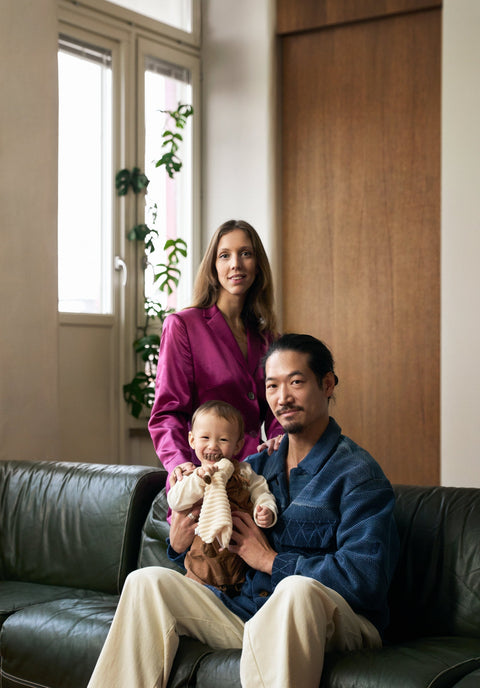
Amanda & Hans’s Renovation Journey: From Old School to Architectural Dream Home
On a ridge south of Stockholm, within a former 1950s school building designed by Paul Hedquist, architect Hans Tang and entrepreneur Amanda Johansson have created their home. Here they live with their son Mono, in a flat where the robust foundation of Functionalism meets a contemporary and personal design language, influenced by both Italy and Japan.
Hans Tang has a distinguished background as an architect and now runs Tang Studio, having previously worked at White arkitekter and with studies from KTH Royal Institute of Technology and Tokyo under his belt. Amanda Johansson is a co-owner and former CEO of the company Enkelrum, has studied interior design in Milan, and worked for the prestigious interior design magazine Frame Magazine in Amsterdam. The duo's collective expertise in spatial awareness, materials, and design has culminated in a residence that breathes both history and modernity.
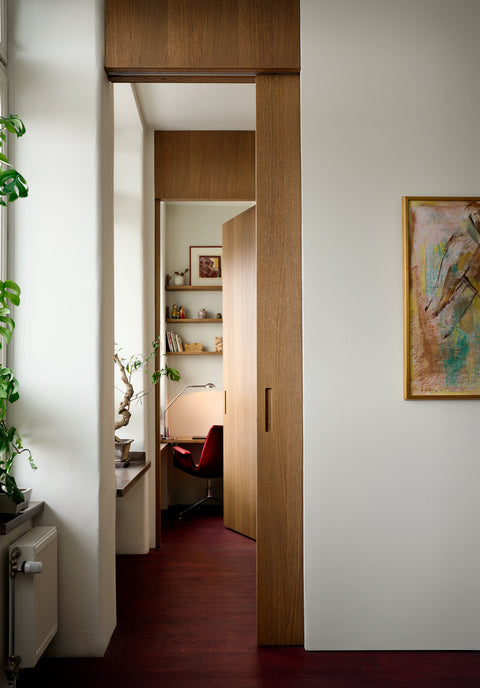
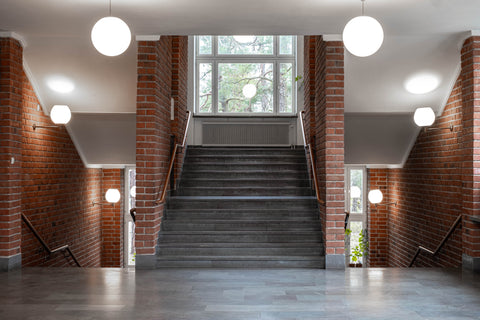
Image from the stairwell, taken by Hans Tang.
Although the couple were not actively searching for a new residence, they have always been drawn to places with a strong and unique character. "So, when we stepped into the old school building, we immediately sensed something extraordinary," Amanda recounts. The ceiling height of a full 3.20 metres, the abundant natural light, and the generous communal spaces defined by Öland limestone and solid oak sections spoke for themselves. However, a renovation in the 1990s had concealed much of the flat's original history behind new layouts. This ignited a powerful calling in Hans and Amanda: they wanted to carefully restore the space and allow the original architecture to reclaim its prominence.
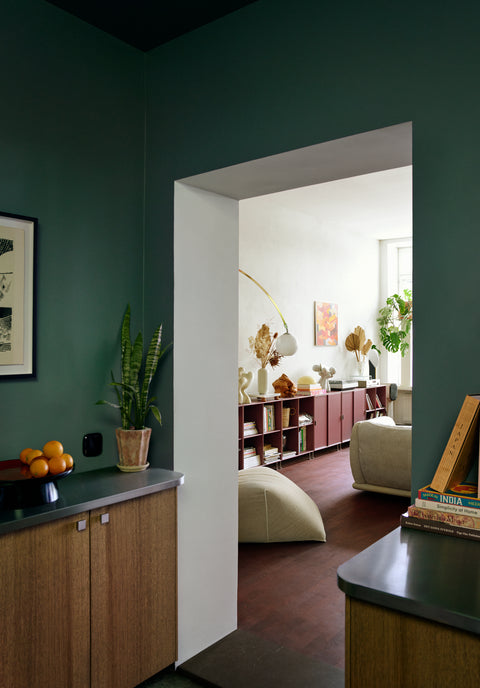
The renovation philosophy was rooted in the existing school architecture and an uncompromising focus on reuse. To reconnect with Paul Hedquist's Functionalist proportions and spatial logic, the couple chose to demolish all the interior walls that had been added during the 90s. The result was an open, social area with a free-flowing layout. The only wall preserved was a solid acoustic wall from the time the building served as a school.
The choice of materials is imbued with a sustainable mindset and a desire to preserve. Beneath a layer of oak parquet in the hall and kitchen, they discovered the original floor of Öland limestone. This was polished back to its former glory, while the reclaimed parquet was used to repair the floors in the other rooms of the home. To give the classic oak parquet a new and exciting lease of life, it was stained a deep oxblood red, a tone meticulously developed with its own NCS code. This vibrantly coloured floor became the unifying thread of the home. To soften the transition between the wooden and stone floors, elegant thresholds in red Jämtland limestone were custom-made.
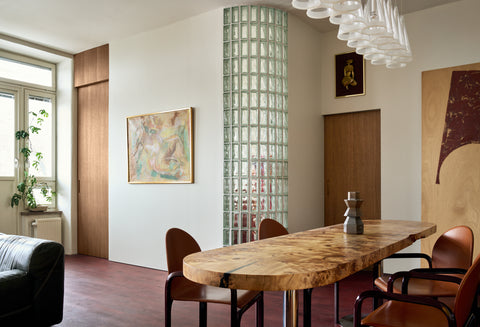
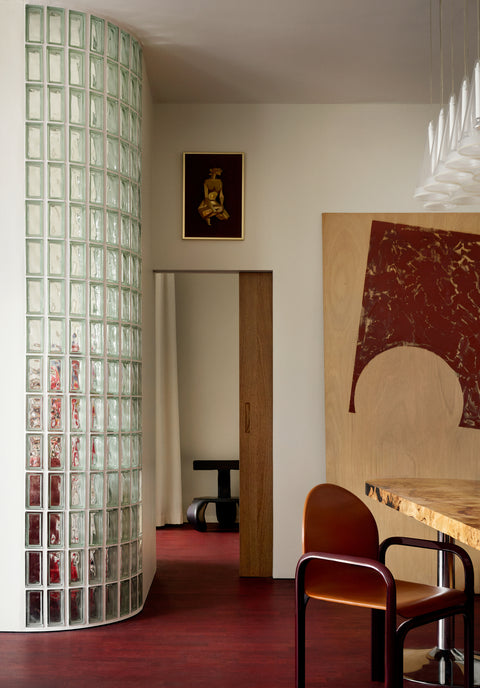
Light in the flat is maximised by a boldly placed glass block element that allows daylight to penetrate deep into the home, creating a strong architectural signature right from the entrance. The walls were kept a neutral white, with accents of tactile plaster inspired by the former studio of ceramicist Hertha Hillfon.
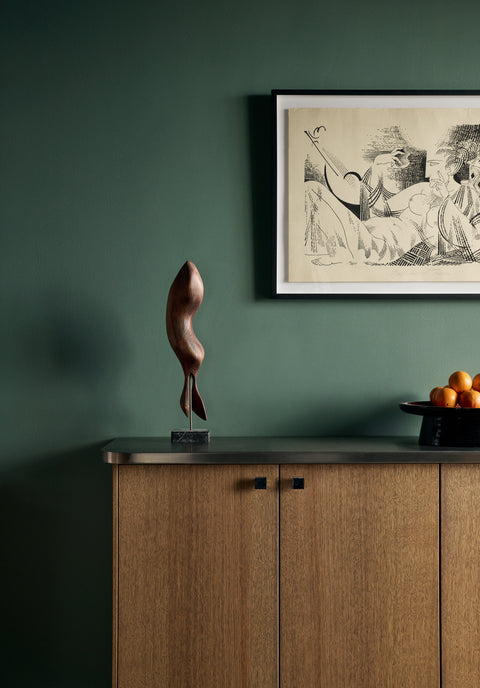
The interior design reflects the couple’s international background and is the fruit of several years of careful collecting. The grandeur of Italian design philosophy meets the clean, simple lines of Japanese form.
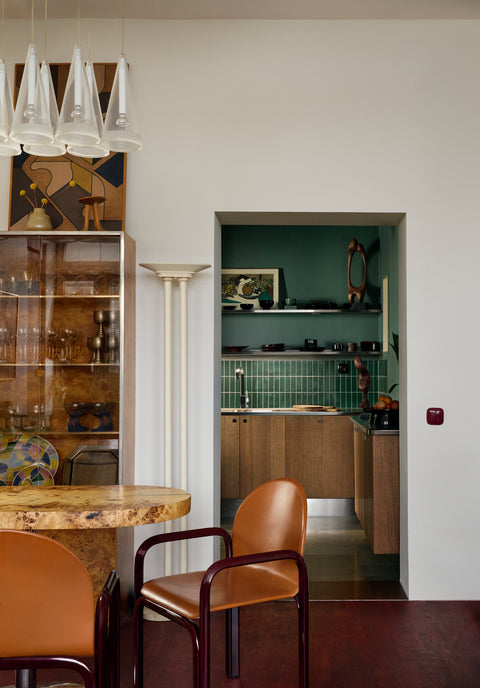
The dining area is the natural heart of the home. A centrally placed long table, designed by Hans and Amanda themselves, stands there. The table, whose solid mappa burl top was crafted by the fine cabinetmakers at Ateljé Örnsberg, is only 65 centimetres deep. The inspiration came from friends in Berlin, where the narrow design fosters an intimate closeness among dinner guests. Around the table are chairs designed by the Italian Gae Aulenti, acquired through antique contacts.
The home is filled with a well-balanced mix of timeless design classics—such as antique display cabinets by Willy Rizzo and an FK Chair from Walter Knoll—and contemporary Swedish design from creators like Niklas Runesson and Anna Harström.
When it came to choosing doors, the choice naturally fell to Njord. Through her experience at Enkelrum, Amanda was well acquainted with the high quality that Njord doors represent. The couple sought a solution that combined solid, durable materials with great adaptability in tone and appearance, allowing the doors to integrate seamlessly into the home's design.
"With an impressive height of 2.7 metres and over-panels in a matching veneer, they serve as much more than mere room dividers," explains Hans. "When closed, they appear almost as majestic portals or standalone works of art. This solution creates a stronger architectural effect than if the doors had extended all the way to the ceiling. And the milled grip handles contribute to a soft and pleasant experience every time the doors are used," he adds.
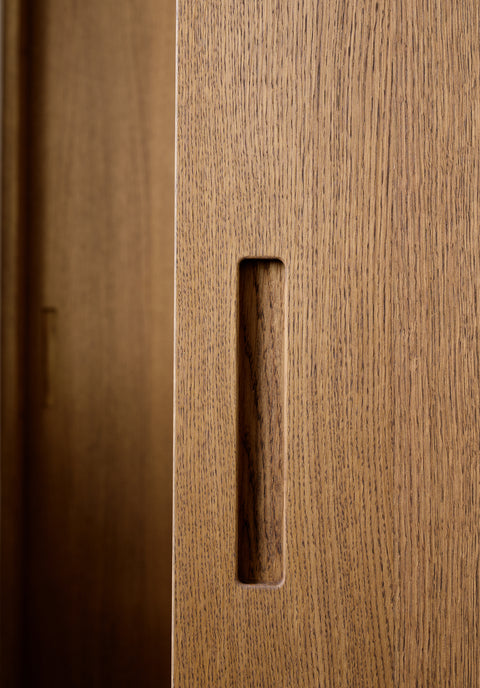
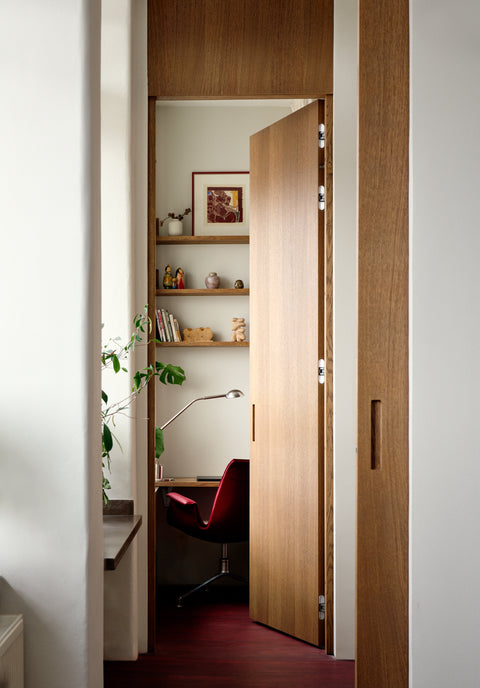
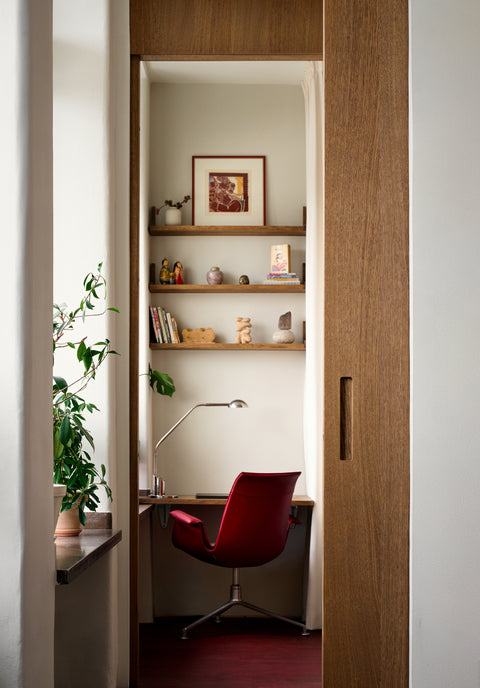
The result is a home where the optimised floor plan, the unique architectural details like the circular glass block element, and the Njord doors interact in perfect harmony. Working with the existing fabric rather than replacing everything with new required both time and patience, but it also became an important statement that the couple are immensely proud of today.
Location: South of Stockholm
Home: Amanda Johansson & Hans Tang with family
Products: Oak | Door Frame k02 | Sliding Door
Photographer: Emma Jönsson Dysell | @emmajonssondysell